
break down the “wall” between the practice room and the gig, and finally play what you practice
With a college-level curriculum, 2 weekly LIVE workshops with ME, and unlimited video feedback
enrollment now open for August and september. limited slots available.
real students talk about breakthrough coaching
Jonah and Jack speak about their progress in the program.
You practice every day. So why isn’t it coming out in your playing?

It’s the number one complaint I hear from aspiring drummers:
“I practice all the stuff people say I should. And I STILL can’t access any of that when I go to perform.”
You do your homework.
Whether it’s rudiments, coordination, or licks you see on social media, you’re putting in the time.
So why, when it comes time to play - whether a gig, rehearsal, jam session, or even unstructured playing by yourself, do you feel like you can’t access any of that?
There’s a very simple request I make of new coaching students when they join my programs. (Perhaps this will be you…)
“Play me a groove, and play me some improv.”
No sheet music.
Not something they memorized.
It can be as simple as they want, but they have to come up with it off the top of their heads.
And for many, this is a challenge. They’ll either stick to something very “safe”, without much variation…
…or, if they push themselves outside of their comfort zone, it often sounds tentative and halting. The sounds aren’t clean.
It CERTAINLY doesn’t bear much resemblance to what they’ve been practicing.
But our favorite drummers don’t have that wall. They play intricate, creative stuff that sounds like they wrote it down and practiced it verbatim, except they’re coming up with it off the top of their heads.
And they look like they have complete freedom - whether they’re grooving, playing a fill, or taking a solo.
What are they doing so differently?
“fluency” - the word we’ve been missing
I needed a word that captured what great drummers do that some aspiring ones can’t quite capture.
It’s not just that “pro” drummers have a lot more licks than we do.
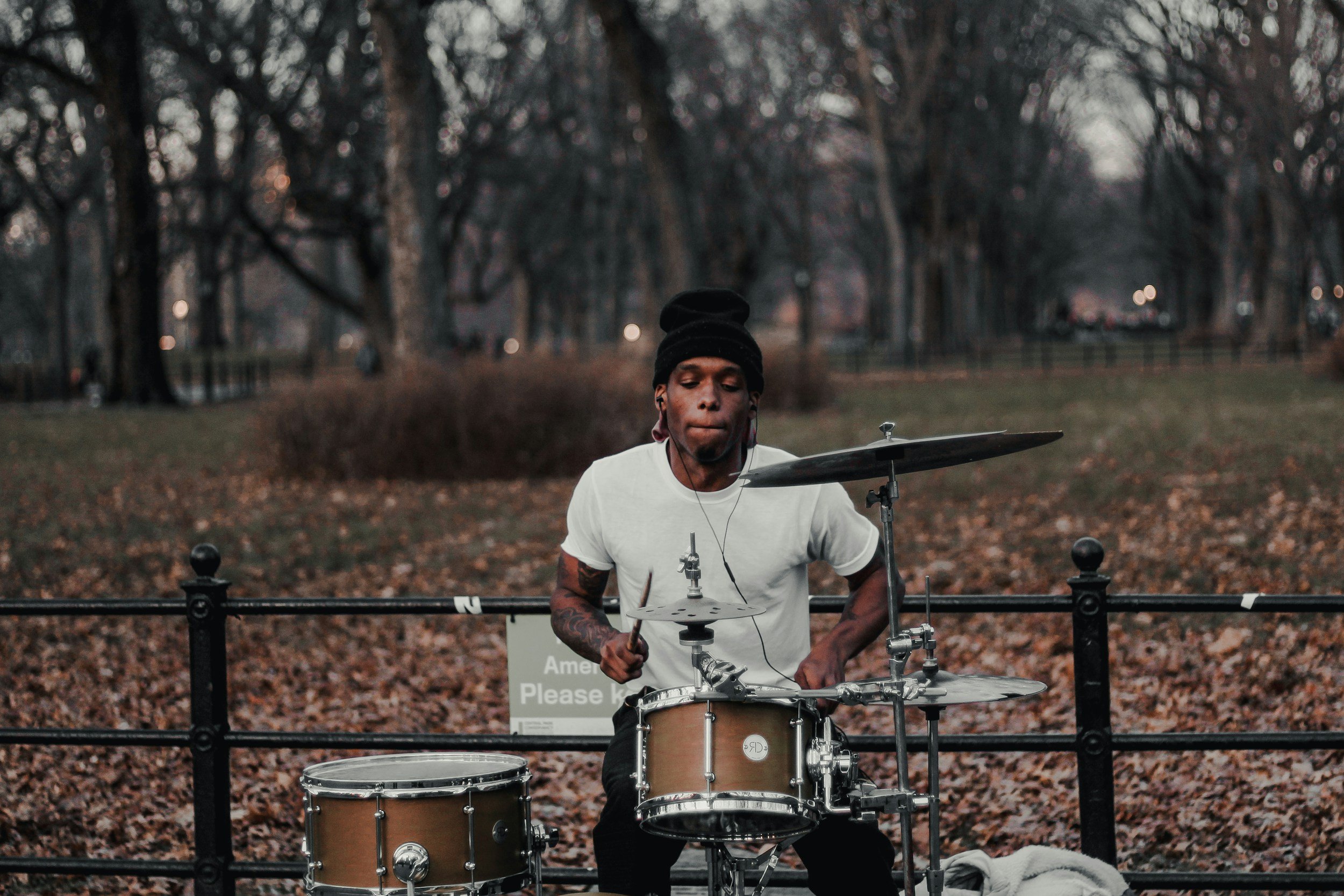
Nor even that many can play fast and “flashy”.
It’s that everything they do, they do well, and also improvised.
And it doesn’t have to be a lot. And it doesn’t have to be fast or flashy.
Imagine we were speaking a language instead of playing drums.
If you’re reading this, it’s likely your drumming feels like having a few sentences memorized in a foreign language, but feeling “shaky” if the conversation goes beyond “I’d like a coffee” or “can you show me the way to the bathroom”.
And just like learning Italian or French, you’re not trying to say all the words in the world, or speak faster than an auctioneer. You just want to make clear, personal sentences off the top of your head.
That’s fluency.
And the language analogy also points to a “hidden in plain sight” answer to the question “why can’t we play what we practice”?
Because we’re not practicing remotely right.
the cult of memorization
Imagine if you learned French by simply memorizing whole paragraphs out of a book, and tongue exercises.

Don’t just memorize from books.
Imagine if everybody just assumed that by memorizing passages, and exercising your tongue, eventually “it would get in there.”
Obviously that would be ridiculous.
In learning languages we learn a little bit of vocabulary, a little bit of structure, then we “rehearse” all that stuff in context.
Sentence completion.
Matching the correct verb tense to the sentence.
And, the crux - making our own simple sentences with the source material.
So why don’t we practice drums like that?
fluency on drums - a paradigm shift
Since I started my channel, I’ve been trying to perfect this “fluency” approach to drums, though I didn’t know exactly what to call it.
Since then, some other creators have adopted this shift.
For lack of a better word, I call this “next gen drum learning”.
Old Way - memorize a bunch of licks.
Since time immemorial, drum pedagogy has emphasized learning transcriptions of great drummers. Or, the modern incarnation: learning a cool beat of lick from social media.
It’s not totally wrong - just as reading real life passages in French or Italian is useful for learning how natives use the language in context. It’s just way overused.
And it gives the false impression that we should be copying great drummers verbatim, rather than building our own vocabulary.
Old Way - technical facility without context.
These are your endless hand, coordination, independence, and speed exercises.
Of course facility is important - I have a growing curriculum to get drummers to leverage their fingers for more speed, and use the “walking/running” concept for more control.
But technical exercises without a musical imperative are like “tongue warmups” with gibberish, or intentionally “tongue-twister” phrases in a foreign language. Your “Peter Piper picked a peck of pickled peppers.”
Are vowel and consonant clarity important? Sure. But not more important than learning how to make your own sentences.
We’ll talk about the “new way”, but I just want to pause and ask…
With exercises like that, is it ANY WONDER millions of drummers are frustrated they can’t play what they practice?
So - what do we do about it?
New Way - learn “idioms”, and use them in a sentence.
If you want to become fluent at drums, you need to get to the point of improvising with cool vocabulary and nailing it as quickly as possible.
So, just like Italian, you start small.
Instead of full transcriptions of your favorite drummers, just a few musical words, so you can practice playing them cleanly and clearly…
…then, “using them in a sentence” almost immediately.
There are many ways to do this:
“Switching exercises”, in which you recombine small bits of vocabulary like “scrabble letters”.
“Algorithms”, in which you have a finite number of options of what to play, and each option has a couple of “flavors”.
“Bounded improvisation”, in which you’re free to come up with your own ideas, but in a “bounded” environment. For instance, a beat in which you play an ostinato with your hands, but are free to improvise with your bass drum, or a an improv exercise in which you can play only certain subdivisions on certain surfaces.
But what about technical facility?
New Way - technical facility in direct support of musical goals
The reason we practice rudiments is not “to be good at rudiments”, but rather because we want to “pronounce clearly” our musical ideas.
That’s it.
If your ideas are faster and more elaborate, we’ll need more technical facility.
But the primary challenge for most aspiring drummers is simply to play a beat with all the backbeats the same volume, in the center of the beat,
To play a basic fill, slow-to-medium, clearly, in time, with all beautiful drum sounds.
So we practice stuff that seems super beginner level, but we play it with a new level of detail.
Paradiddles super slowly with all the accents as rimshots and all the ghost notes less than an inch above the drum.
Basic beats with consistent rimshots and “vertical spacing” (i.e. not flamming the limbs).
So where are we supposed to find a course like that?
You’re in luck, because I built one.
introducing - 8020 breakthrough coaching

A new six-month course that takes you step-by-step from feeling like there’s a wall between what you practice and what you play…
…to Fluency. Being able to preform beautiful, personal ideas that sound like you wrote them down and practiced them to perfection - only you’re coming up with them on the spot.
Plus...
Weekly live workshops with me and your fellow students...
...and unlimited feedback on your playing from me.
Breakthrough coaching is the most flexible and affordable of my coaching programs, though it's still an investment, and it's great for that drummer who is dedicated and self-starting, but wants regular feedback from me and help staying consistent.
exactly what breakthrough coaching includes
If accountability and great material are key combo for achieving success, here’s how we do it.
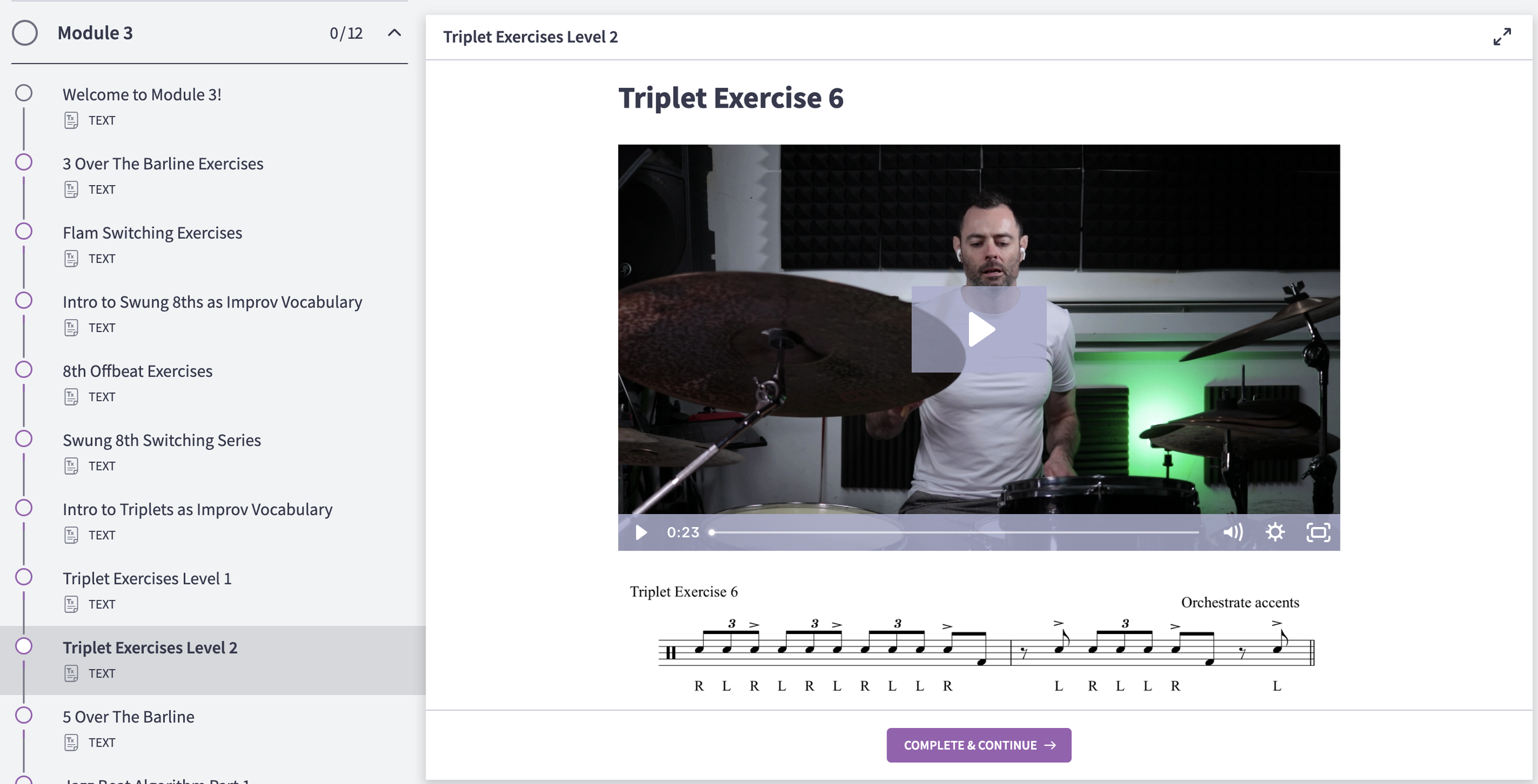
Just one example of the type of material we’ll draw from.
A new, ten-module, college-level curriculum I co-designed with my students - This is the most comprehensive step-by-step curriculum on fluency I’ve ever seen. It’s laser-focussed on taking you from your currently level, to improvising clean, personal, fluent ideas on the drum kit. It includes “tracks” for beginner, intermediate, and advanced drummers. And “support exercises” to get your hands, feet, timing, and coordination where they need to be to execute the vocabulary properly.
But the centerpiece is the “next-gen” exercises.
Instead of drilling abstract ideas and “hoping” they’ll come out in your playing, we practice idea kernels, and “improvisation games”, with increasing degrees of freedom, to stair-step you to playing like the drummer you’ve always wanted to be.
But there are other courses out there. Here’s what really sets Breakthrough Coaching apart.

Live Interaction - Breakthrough Coaching gives you up to two hours per week of live interaction with yours truly, where you can ask your questions or update me on your progress.
Students use these sessions to bring in material they’ve been working on, to allow me to get them “unstuck”, and also to share stories success and challenge.
Every group call has a mix of different levels of experience.

Personalized Feedback - Every student in Breakthrough Coaching gets unlimited personalized feedback from me, on any video you submit. This keeps you accountable, but also saves you tons of time by making sure you’re focussed on the right details.
The amount of time you can save by knowing the 1-3 things to focus on, out the potential 99 options, is hard to overstate.
It’s not uncommon to hear, from first-time students “nobody’s ever told me that before.”

A “Virtual Campus” - As with all my live coaching programs, in Breakthrough Coaching you get 6 months of access to the virtual campus, and lifetime access to the alumni group. These are private groups where you can “vibe” with your fellow students, as if you were walking down the hall in music school, hearing others practice, and stopping by to ask for and share advice.
what “next-gen” looks like: inside breakthrough coaching
The following is a module-by-module breakdown of exactly what’s in Breakthrough Coaching.
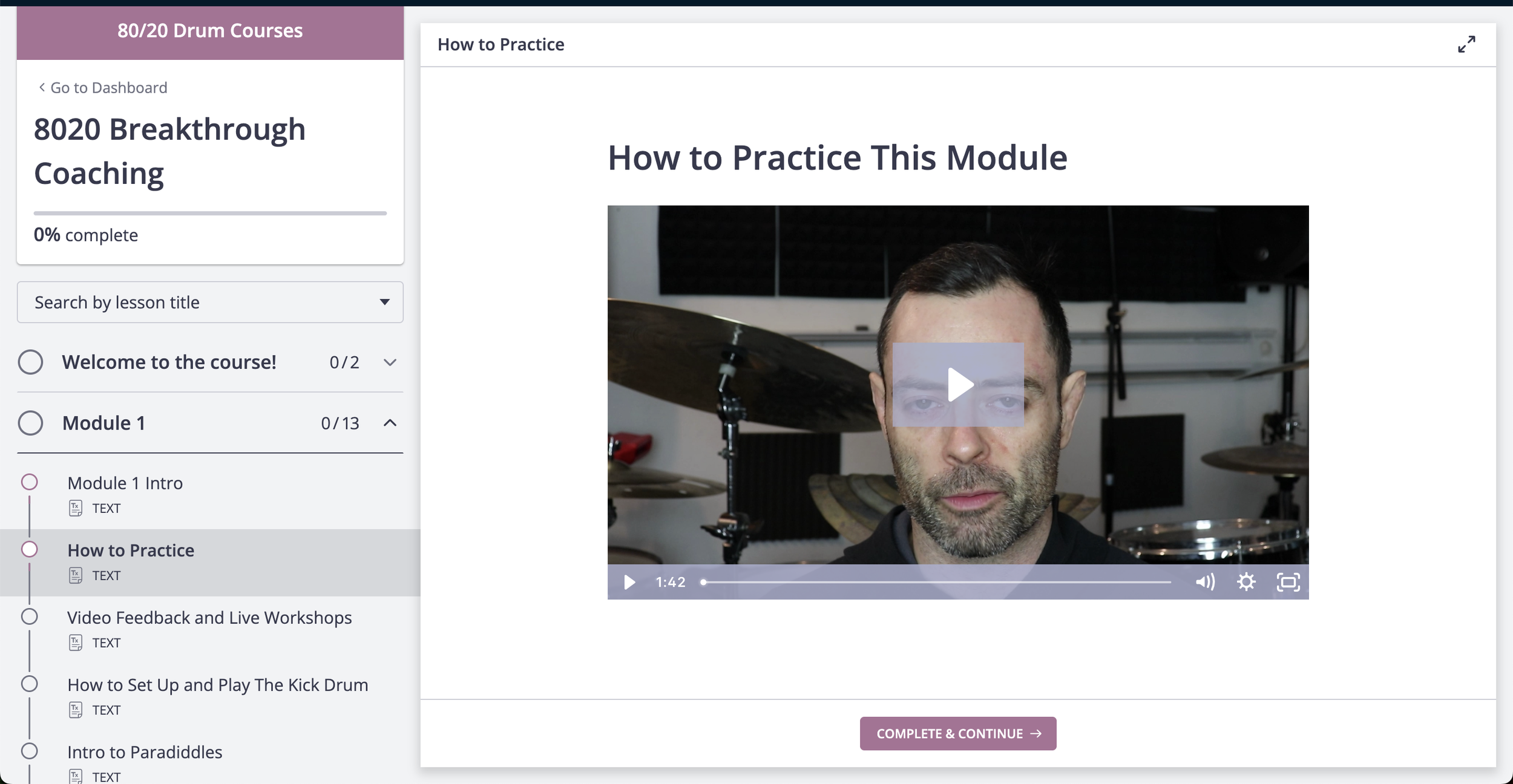
Breakthrough Coaching has over 150 separate videos, organized into 10 modules that grab you by the hand and take you step-by-step through the key insights and exercises to develop fluency on the drums.
It sequences the learning so that you're only working on what you can handle at the time, then builds little-by-little on the skills you acquire throughout.
how the course is organized
Detailed Explanations - For every skill or concept we introduce, there's a video talking you through it...
...then exercise pages with videos of me demonstrating the exercises, and transcriptions you can either view on the page - which I recommend - or download to your device or to print.Chapter Reviews - At the end of every module is a practice summary, which displays all the exercises and transcriptions in one place, and even offers suggestions for places you might want to record yourself to check your progress.
Learn on-Demand - And this course is self-paced, and on-demand, which means you can choose your own pace through the material.
table of contents - here’s everything the course covers
Module 1: Build Your Practice Foundation
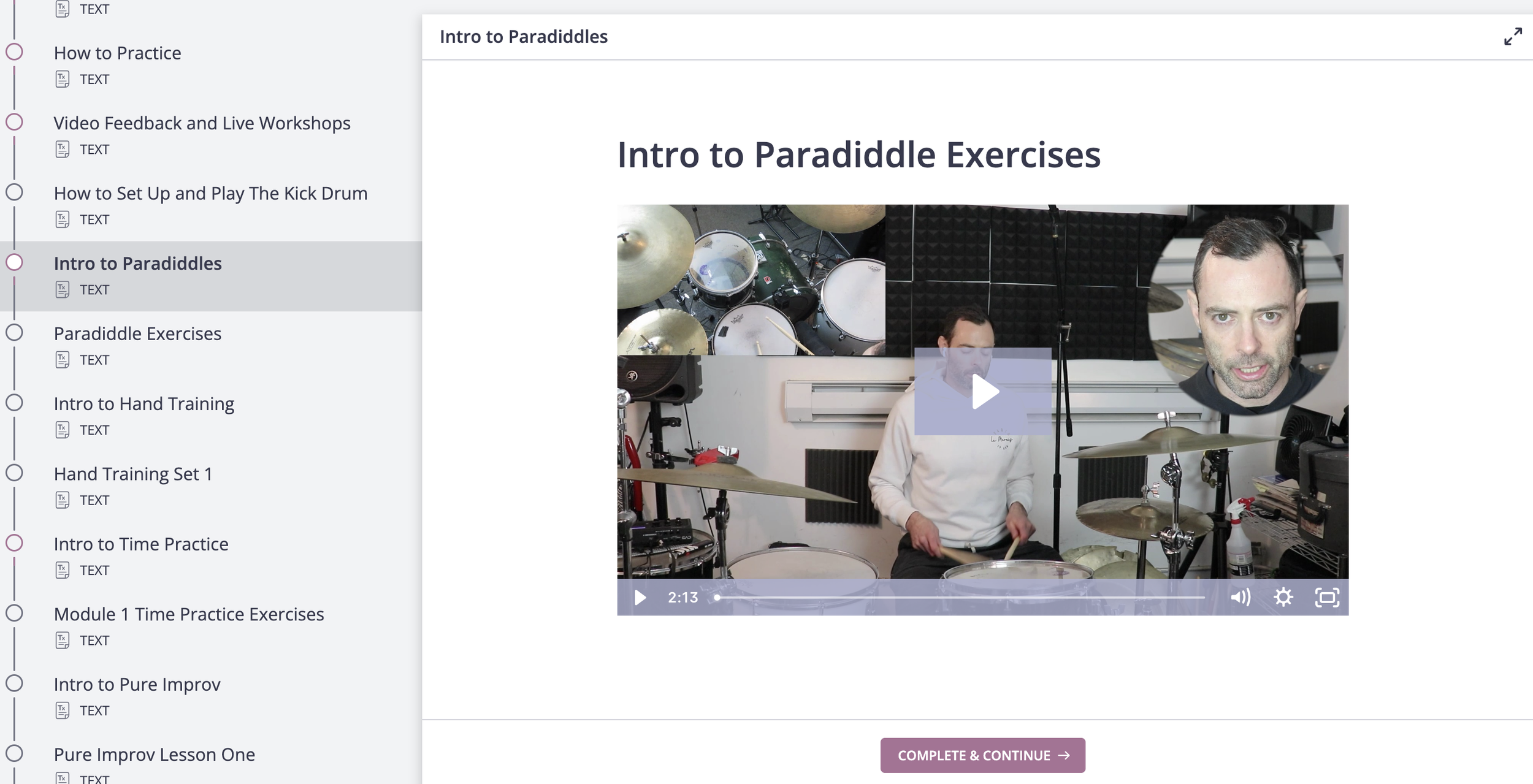
Learn how the program works, how to use video feedback, and how to get the most out of live workshops.
Set up a simple, effective practice process so you’re not just “putting in time,” but actually improving.
Dial in the kick drum: setup, technique, control, and how to make it feel good in real playing.
Start building usable hand vocabulary with paradiddles, paradiddle exercises, and foundational hand-training routines.
Develop stronger time with dedicated time-practice concepts and exercises.
Begin connecting practice-room work to real playing through pure improv and guided practice summaries.
Finish the module with a clear routine for what to practice, how to practice it, and how to start making it show up when you play.
Module 2: Expand Your Vocabulary and Control
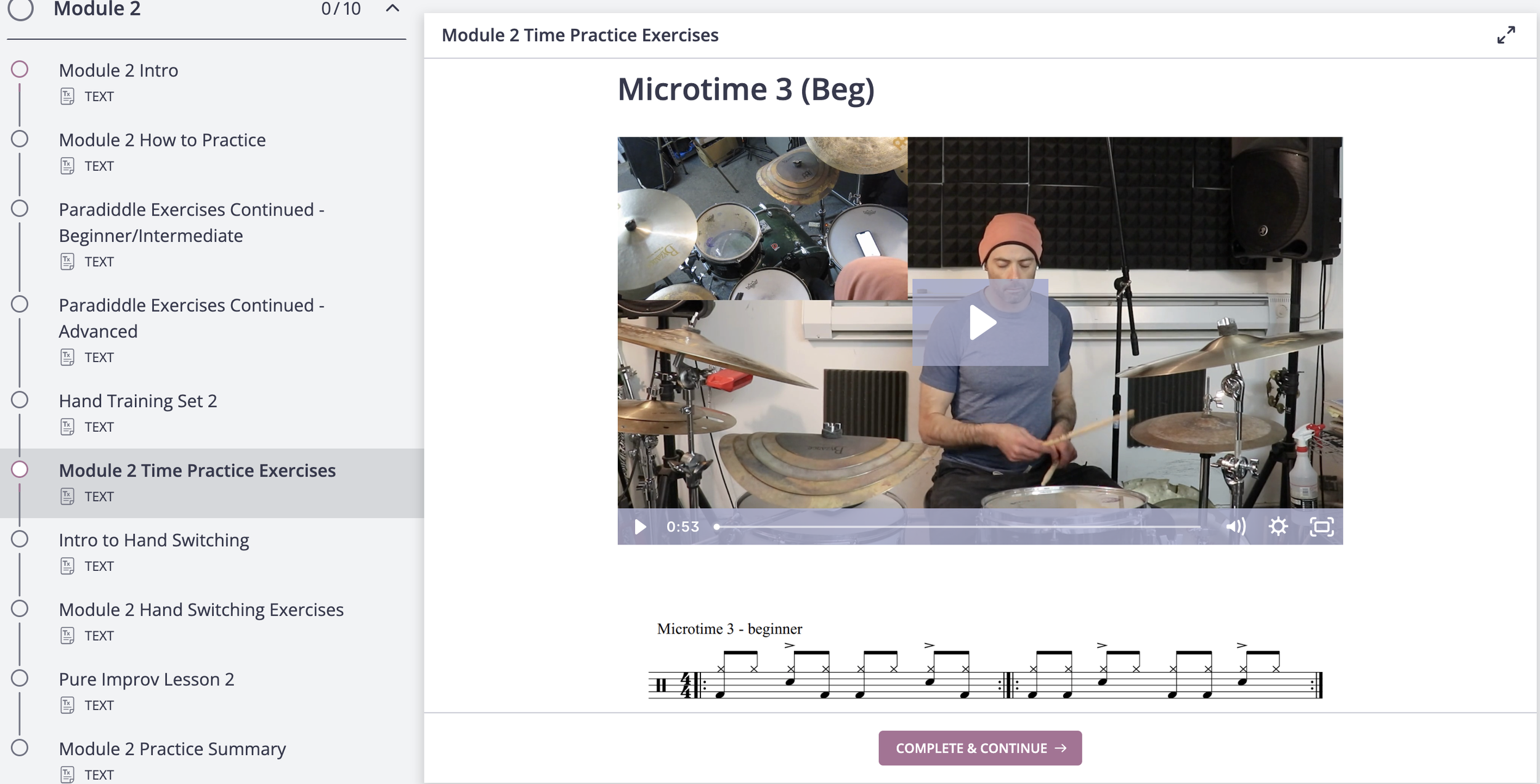
Build on the Module 1 routine with a more focused practice structure for the next stage of the program.
Continue developing paradiddles with separate beginner/intermediate and advanced exercise paths, so you can work at the right level.
Strengthen your hands with Hand Training Set 2, adding more coordination, control, and consistency.
Improve your internal clock with a new set of time-practice exercises.
Learn the concept of hand switching: how to move ideas between the hands without losing flow or time.
Practice hand-switching exercises that help turn technical patterns into flexible musical vocabulary.
Continue developing your ability to improvise freely, using the material from the module as raw material for real playing.
Finish with a clear practice summary so you know exactly what to work on before moving to Module 3.
Module 3: Add Coordination and Flow
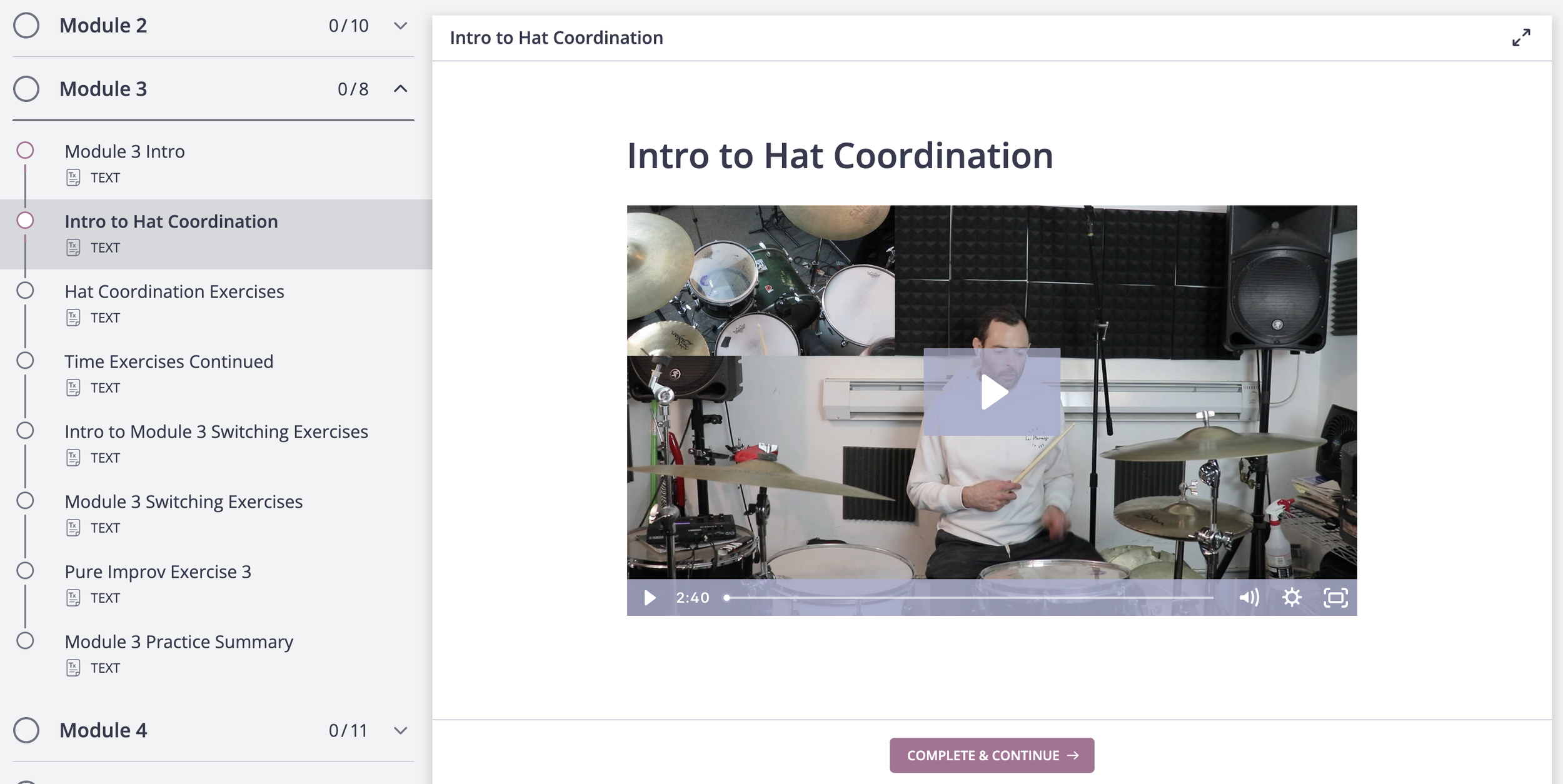
Start expanding your coordination by bringing the hi-hat foot into the practice routine.
Learn how hat coordination works and how to build it without throwing off your time or feel.
Work through dedicated hat-coordination exercises that connect your limbs more cleanly.
Continue developing your time with the next layer of time-practice exercises.
Learn a new level of switching: moving between ideas while staying relaxed, musical, and in control.
Practice Module 3 switching exercises that help you connect technical patterns into longer phrases.
Keep building your pure improv skills so the material starts becoming something you can actually use when you play.
Finish with a clear practice summary so you know exactly how to organize this module before moving on.
Module 4: Build Independence and Musical Vocabulary
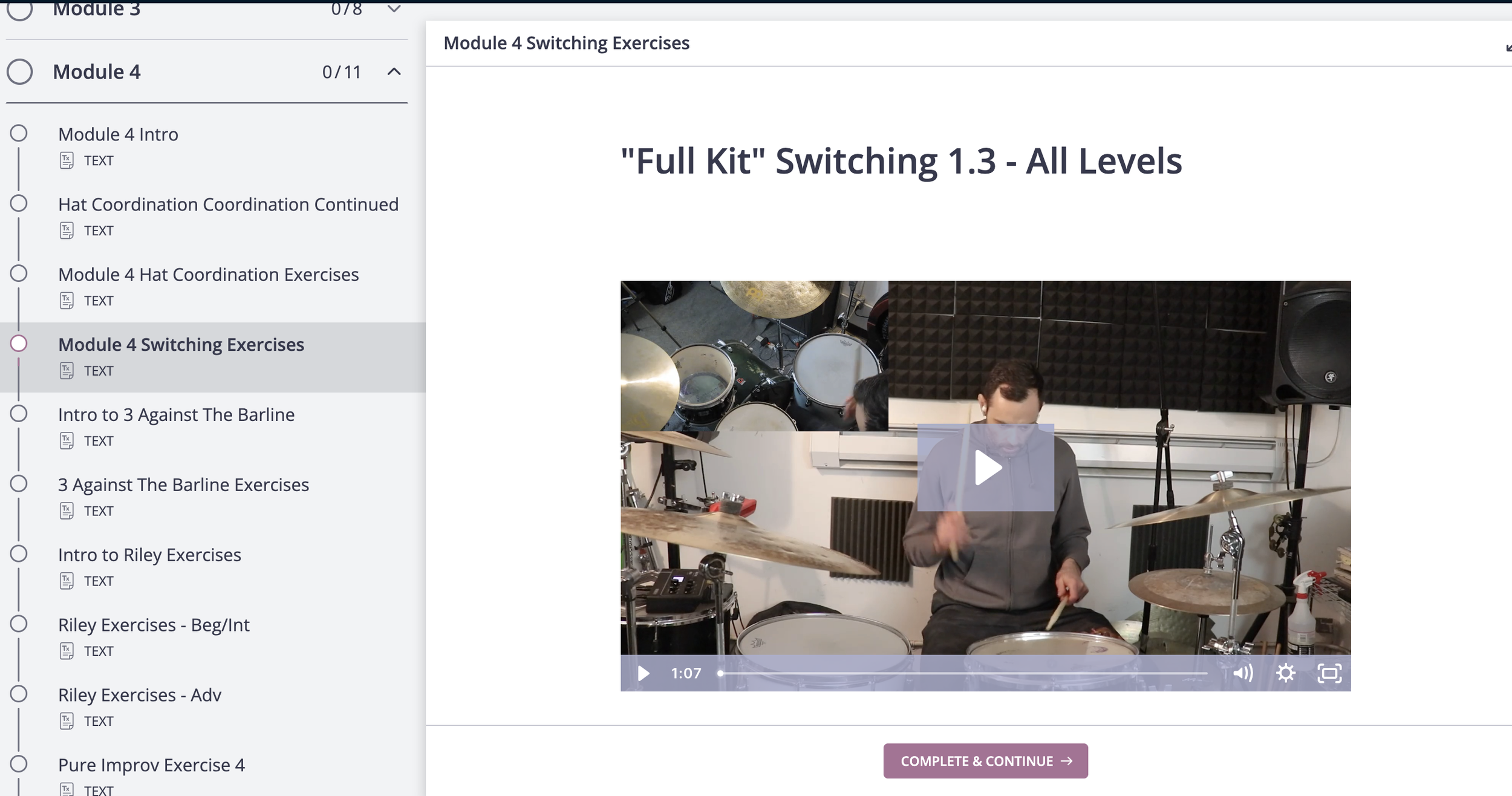
Continue developing hi-hat coordination so your limbs start working together more naturally.
Work through a new set of hat-coordination exercises that build independence without sacrificing groove.
Keep expanding your switching skills so you can move between ideas more fluidly.
Learn the concept of “3 against the barline” and how it creates forward motion, tension, and more interesting phrasing.
Practice 3-against-the-barline exercises that help you hear and feel longer rhythmic shapes.
Start working on Riley-style exercises to connect technical vocabulary with real musical phrasing.
Choose between beginner/intermediate and advanced Riley exercise paths depending on your level.
Continue developing pure improv so these concepts become part of your actual playing, not just isolated exercises.
Finish with a clear practice summary so you know exactly how to organize Module 4 before moving on.
Module 5: Strengthen Coordination, Phrasing, and Flow
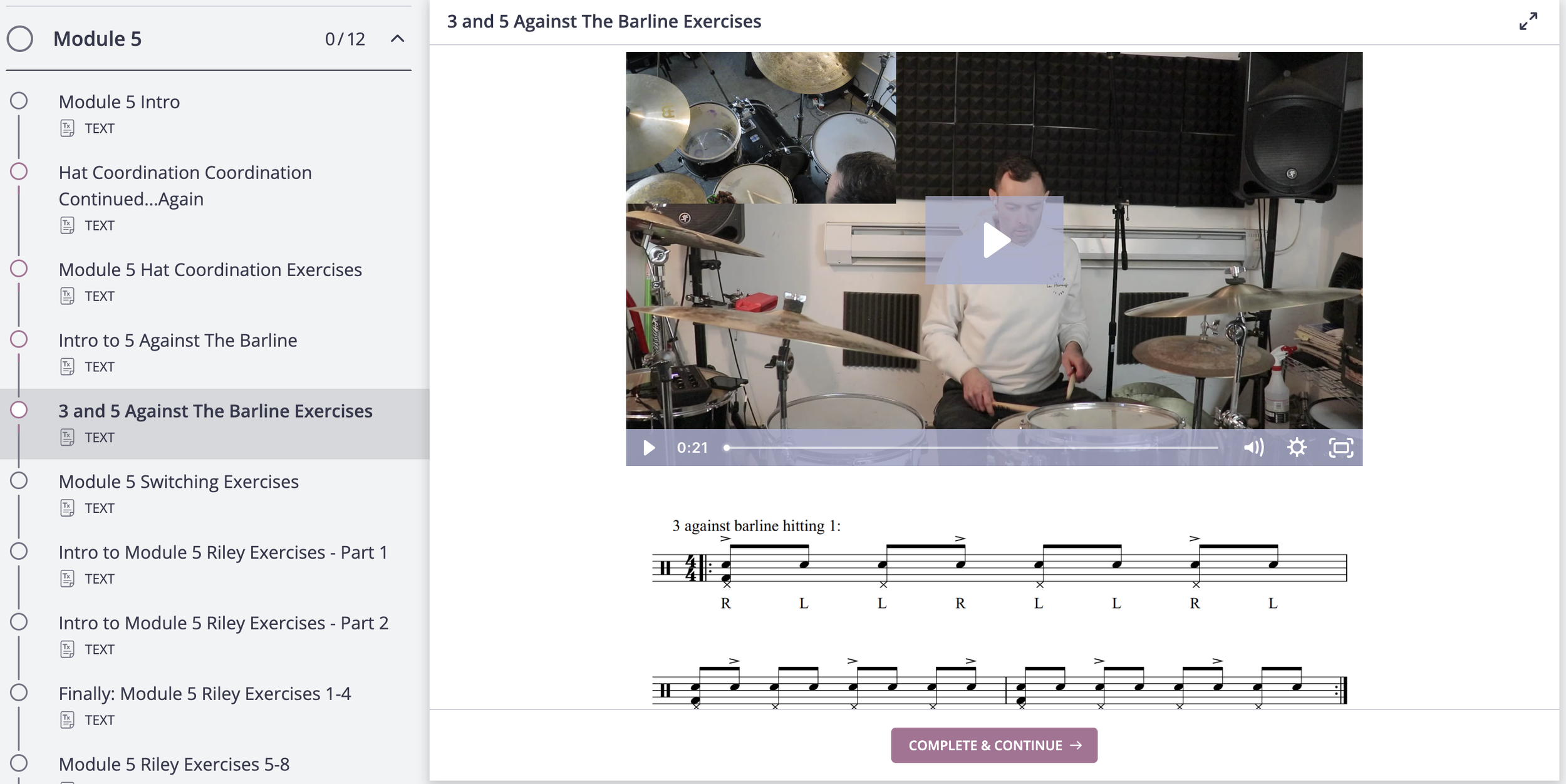
Continue building hi-hat coordination with another layer of exercises to make independence feel more natural.
Work through Module 5 hat-coordination exercises that push your control without losing groove.
Learn the concept of “5 against the barline” and how it creates longer, more advanced rhythmic phrases.
Combine 3- and 5-against-the-barline ideas so you can start hearing and playing more sophisticated rhythmic shapes.
Continue developing switching skills so you can move between patterns, phrases, and ideas more smoothly.
Go deeper into Riley-style exercises with a two-part intro that explains how to approach the material.
Work through Riley Exercises 1–8 to build vocabulary, coordination, and musical phrasing.
Keep developing pure improv so the technical material becomes usable in real playing situations.
Finish with a clear Module 5 practice summary so you know exactly what to focus on before moving forward.
Module 6: Combine Coordination, Switching, and Longer Phrases
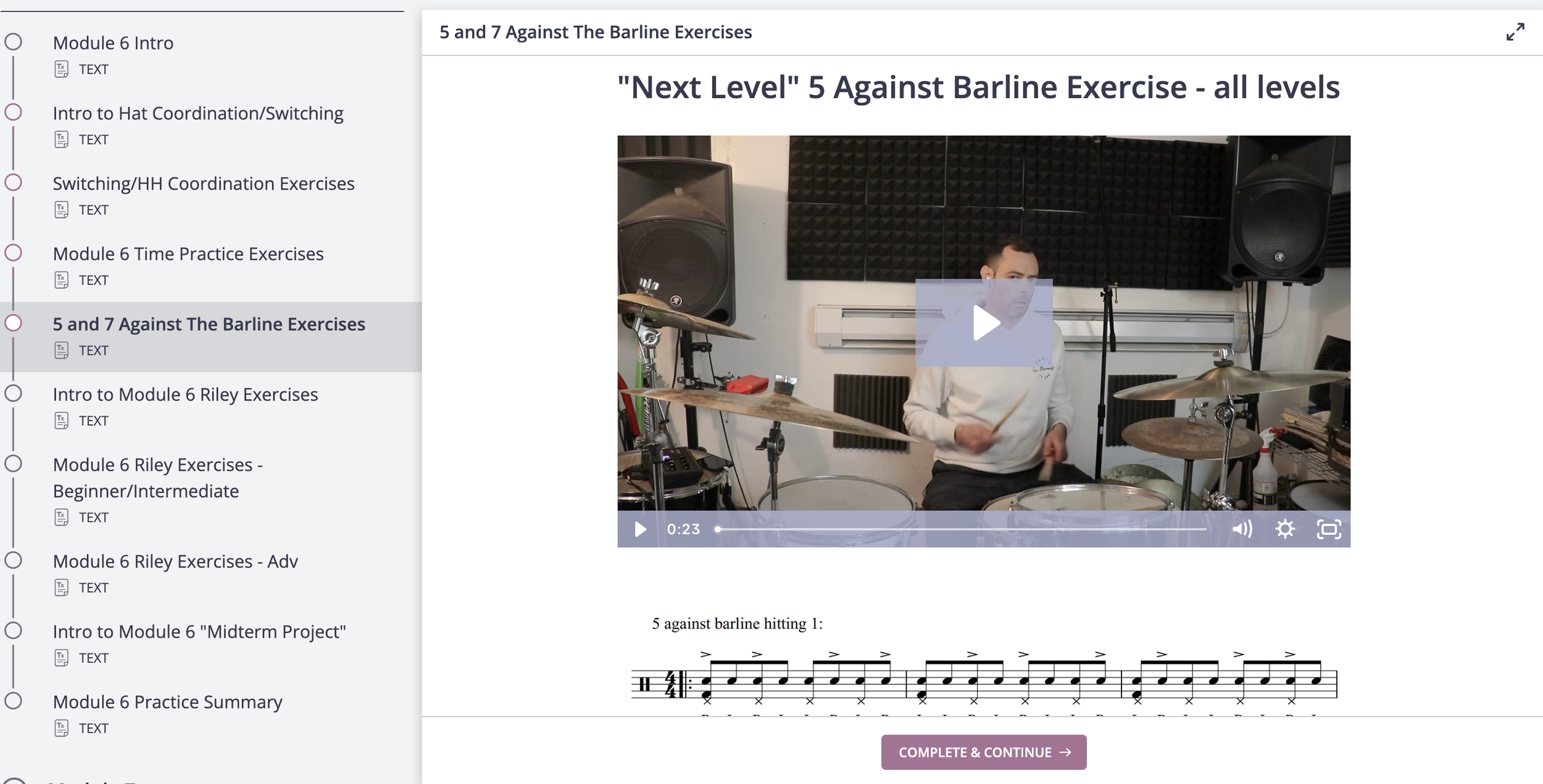
Learn how hi-hat coordination and switching start to work together as one connected skill.
Practice switching/hi-hat coordination exercises that challenge your independence, control, and flow at the same time.
Continue strengthening your internal clock with a new set of Module 6 time-practice exercises.
Expand your phrasing with 5- and 7-against-the-barline exercises, building longer rhythmic shapes and more advanced tension/release.
Go deeper into Riley-style vocabulary with separate beginner/intermediate and advanced exercise paths.
Use the Riley exercises to connect coordination, sticking, phrasing, and musical application.
Begin the Module 6 “Midterm Project,” where you start pulling multiple skills together into a more complete playing assignment.
Finish with a clear practice summary so you know exactly how to organize the material and prepare for the second half of the program.
Module 7: Refine Your Feel and Connect the System
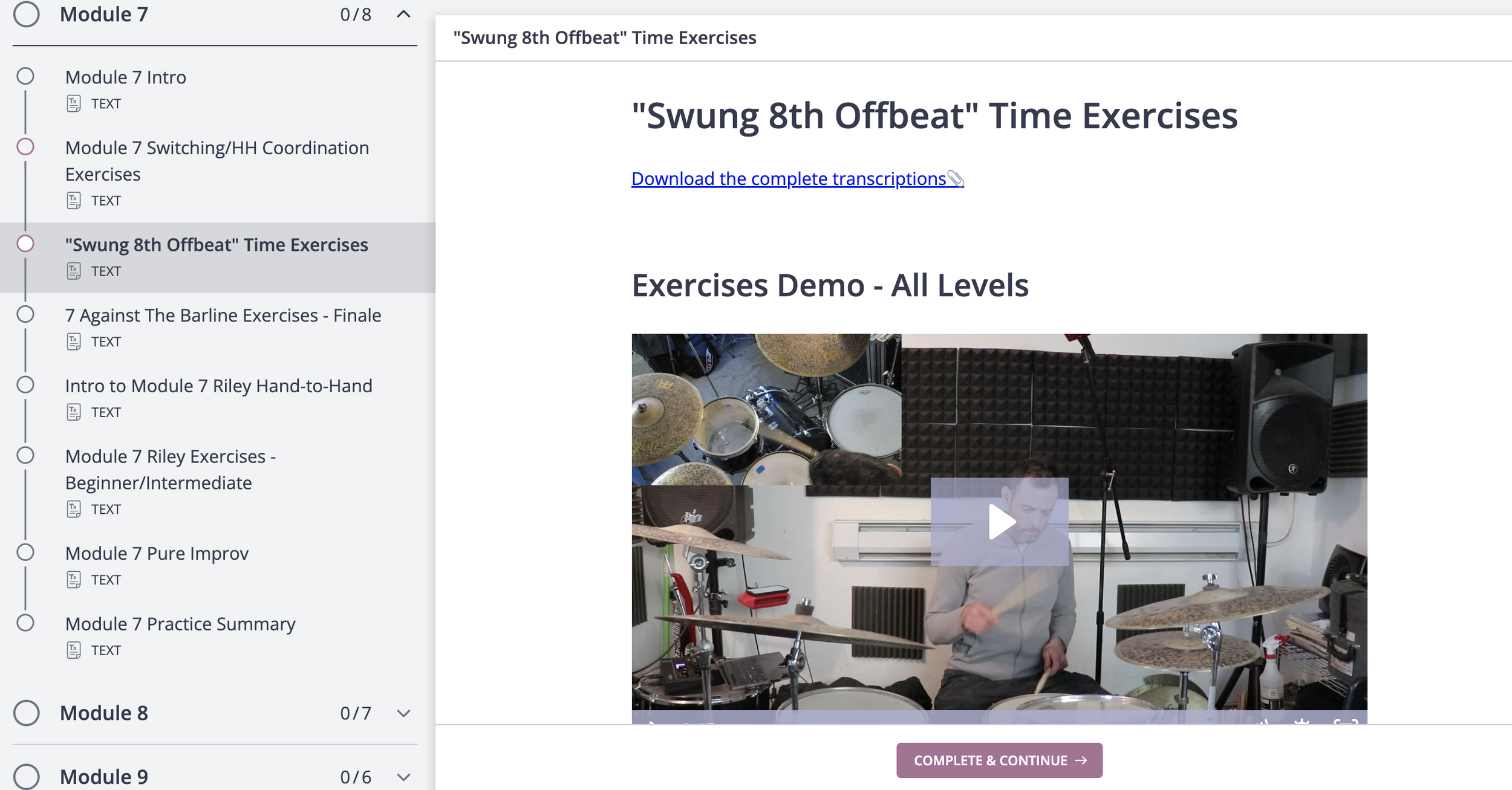
Continue combining switching and hi-hat coordination so the material feels more fluid and playable.
Work through Module 7 switching/HH coordination exercises that challenge independence, balance, and flow.
Develop a deeper sense of feel with swung 8th offbeat time exercises.
Finish the “7 against the barline” series, learning how to use longer rhythmic groupings with more confidence.
Begin Riley hand-to-hand work, connecting the vocabulary more directly between the hands.
Practice beginner/intermediate Riley exercises that build coordination, phrasing, and musical application.
Continue pure improv practice so the concepts become more spontaneous and usable in real playing.
Finish with a clear Module 7 practice summary so you know exactly what to focus on before moving forward.
Module 8: Deepen Your Shuffle Feel and Hand-to-Hand Vocabulary
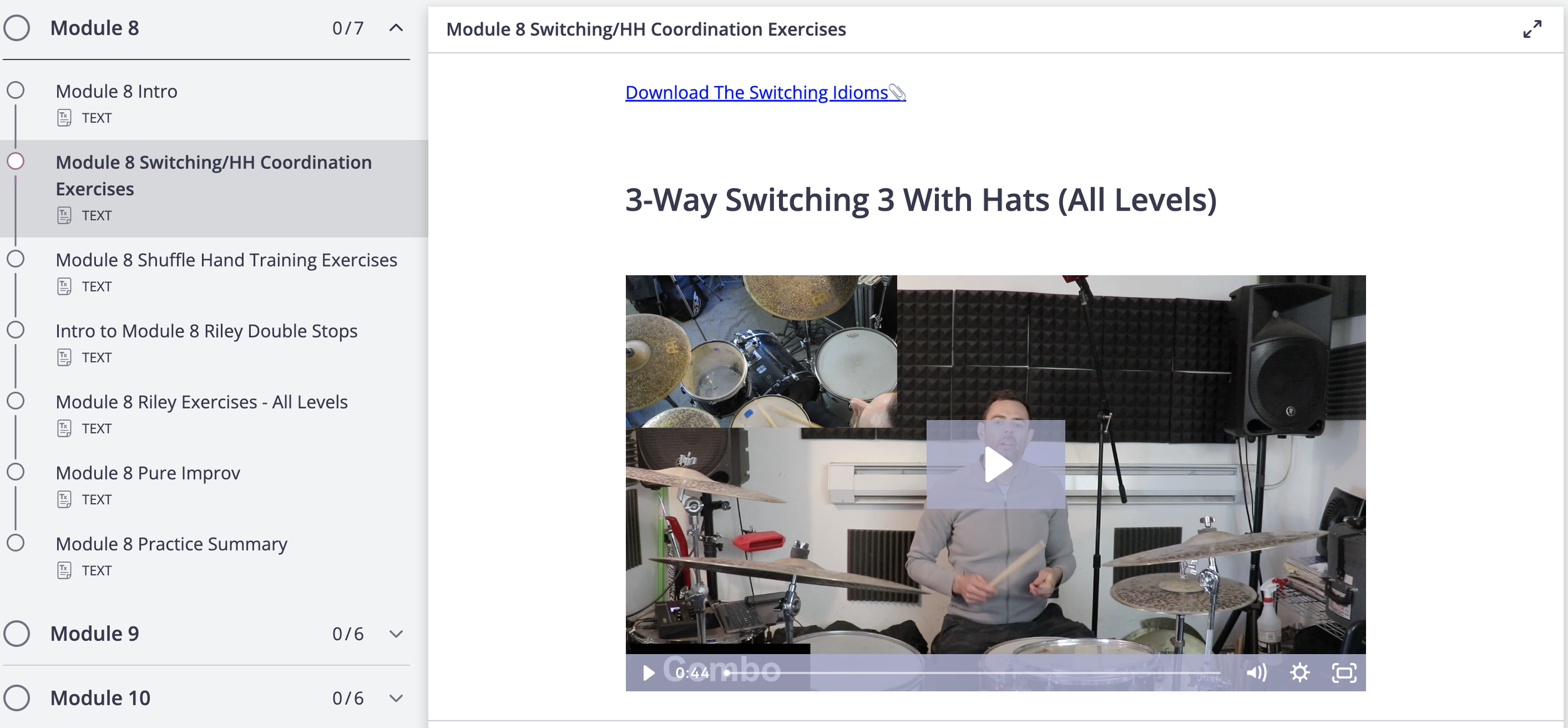
Continue combining switching and hi-hat coordination so your independence keeps getting more musical and flexible.
Work through Module 8 switching/HH coordination exercises that push flow, control, and consistency.
Build your shuffle feel with dedicated shuffle hand-training exercises.
Learn how Riley-style double stops work and how they expand your phrasing options.
Practice Module 8 Riley exercises for all levels, connecting double stops, hand-to-hand movement, and musical vocabulary.
Continue pure improv so the shuffle and Riley concepts start showing up naturally in your playing.
Finish with a clear Module 8 practice summary so you know exactly how to organize the work before moving into the final modules.
Module 9: Strengthen Your Shuffle Vocabulary and Creative Control
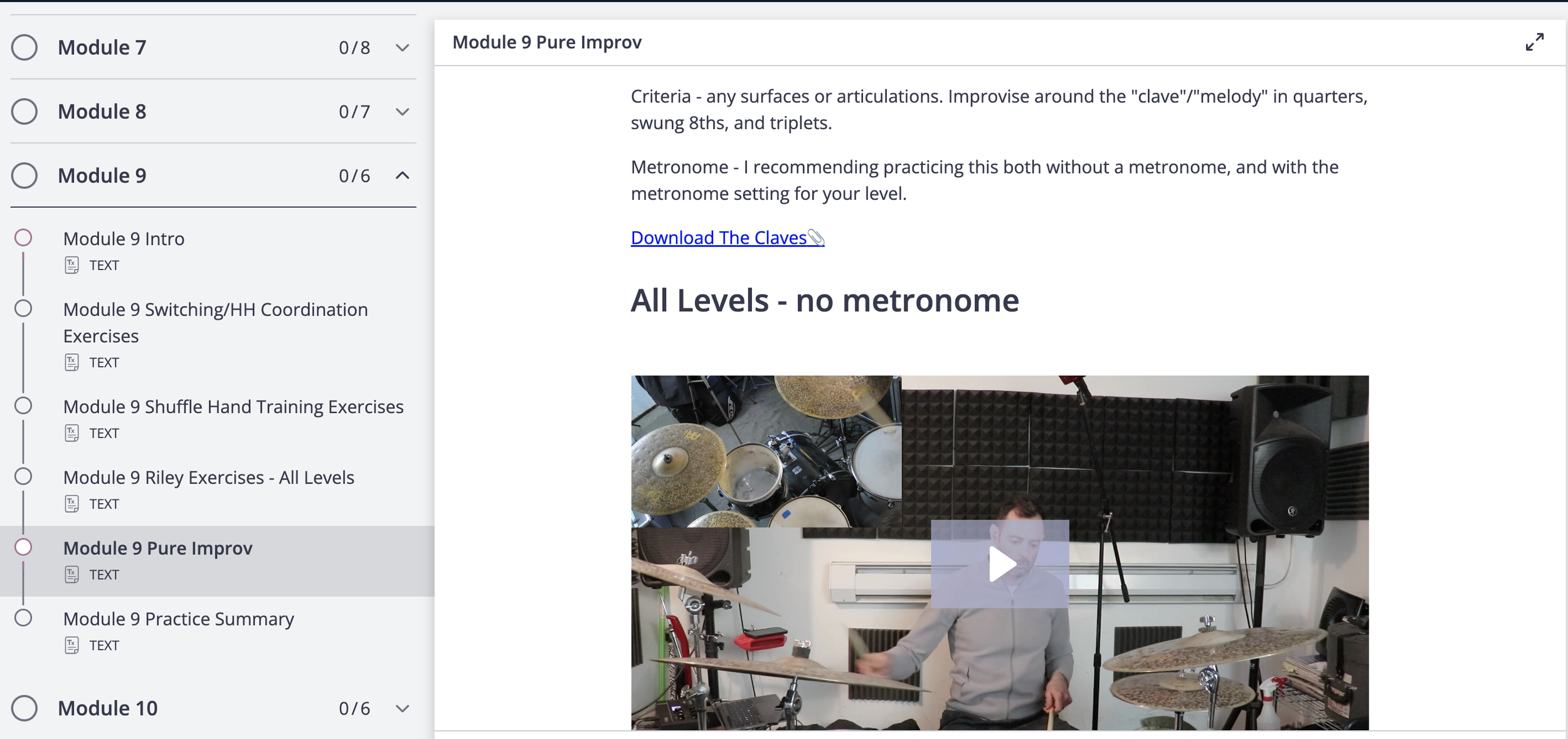
Continue refining switching and hi-hat coordination so your independence becomes more natural, consistent, and musical.
Work through Module 9 switching/HH coordination exercises that challenge your ability to move between ideas without losing flow.
Build deeper shuffle control with another set of shuffle hand-training exercises.
Continue developing Riley-style vocabulary with all-level exercises that connect coordination, phrasing, and musical application.
Use pure improv to turn the module’s concepts into real playing, not just isolated practice material.
Finish with a clear Module 9 practice summary so you know exactly how to organize the work before the final module.
Module 10: Bring the System Into Real Playing
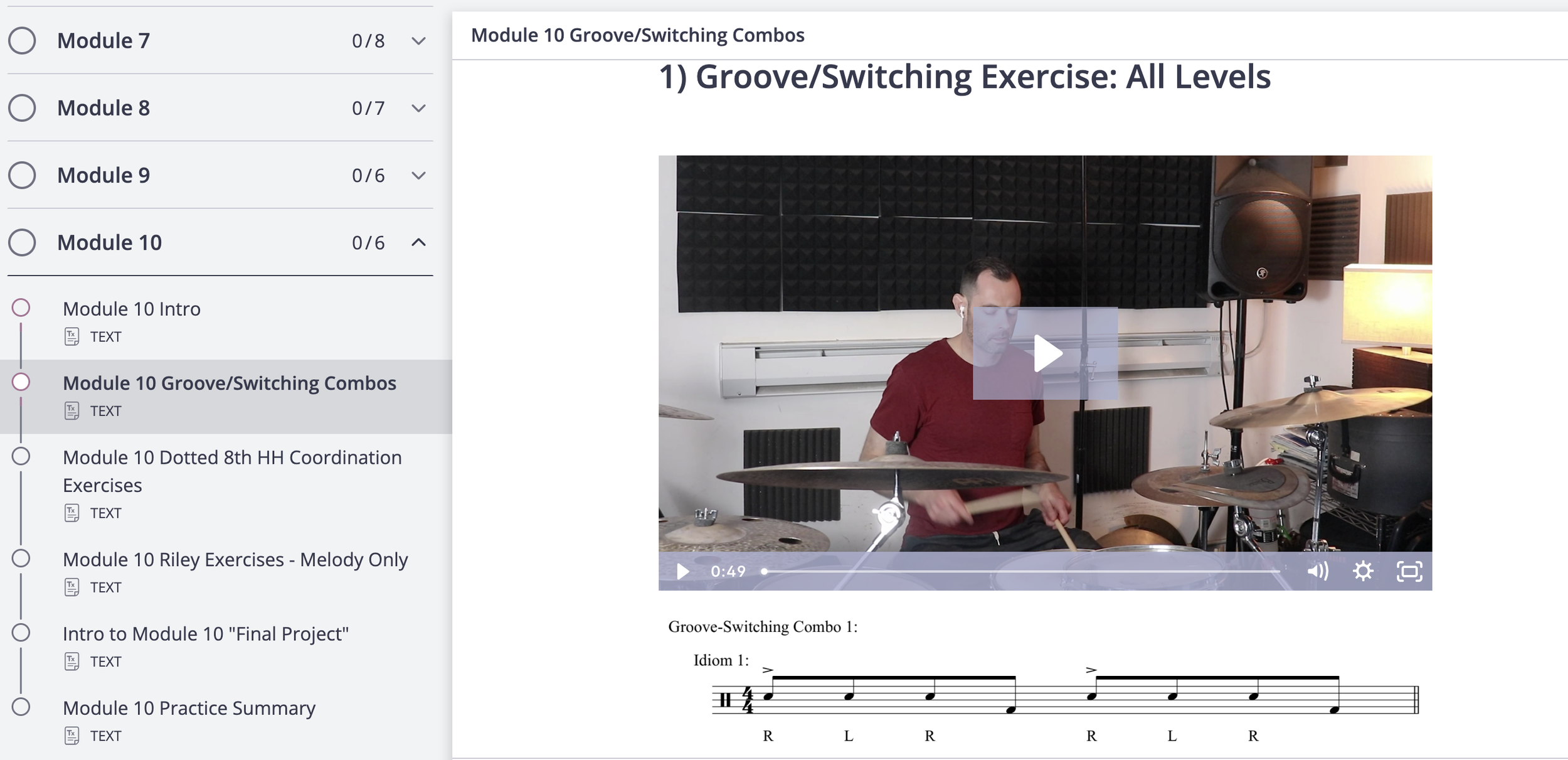
Start combining the major skills from the program into more complete groove and switching combinations.
Practice Module 10 groove/switching combos that help you move between ideas while keeping the music flowing.
Build dotted 8th hi-hat coordination so you can add more rhythmic shape, motion, and independence to your grooves.
Work through Riley melody-only exercises, focusing on hearing and shaping the musical line inside the coordination.
Begin the Module 10 “Final Project,” where you pull the program’s concepts together into a complete playing assignment.
Finish with a clear final practice summary so you know how to keep developing the material after the 10 modules are complete.
the power of live
And this is where the “live” part changes everything.
A lot of drum courses give you good information.
Some even give you a strong curriculum.
But information alone usually isn’t enough to create a transformation — because most students run into two problems:
They don’t finish the course.
They don’t know whether they’re actually focusing on the right details.
That’s the gap Breakthrough Coaching is built to close.
You’re not just getting a sequenced 10-module fluency curriculum. You’re getting that curriculum combined with 2 live workshops every week — with me — for 6 months.
Not a hired coach you’ve never met.
Not one monthly Q&A.
Not a pile of lessons you’re supposed to figure out on your own.
Every week, we’ll take the material from the curriculum and work on it live, so you can ask questions, get clarification, stay accountable, and see exactly how the concepts are supposed to turn into real playing.
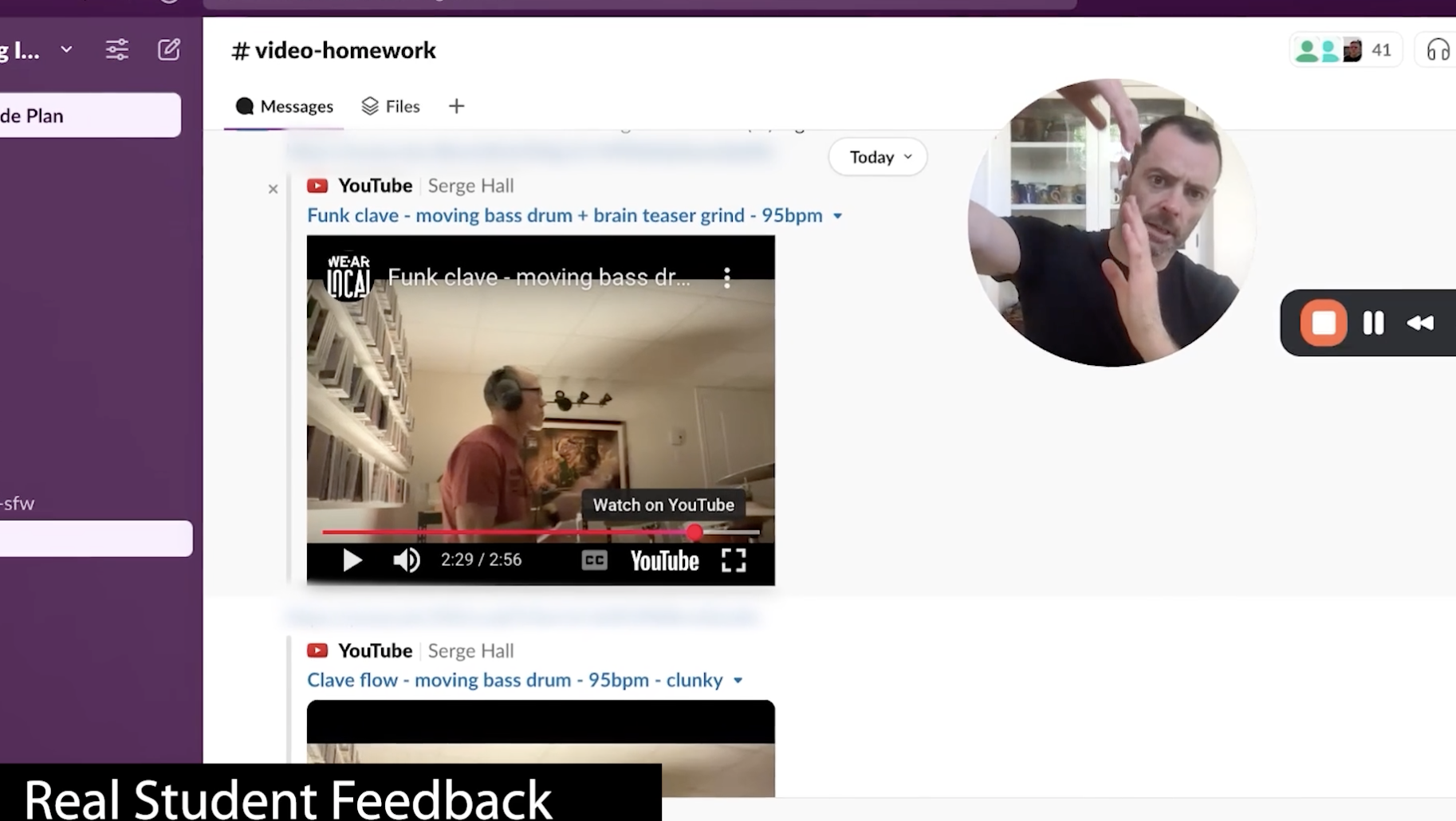
And on top of that, you’ll get unlimited video feedback for the full 6 months.
That means you can submit videos of yourself playing the exercises, and I’ll help you spot the details you would probably miss on your own: the timing issues, coordination problems, tension patterns, setup mistakes, interpretation problems, and blind spots that keep the material from actually showing up when you play.
You’ll also get access to the Virtual Percussion Studio — our private Discord community, and, in my biased opinion, the best drum community in the universe.
So this isn’t just a course.
It’s a complete fluency system:
A step-by-step curriculum
2 live workshops every week
Unlimited video feedback
A serious community of drummers working through the same material
And direct access to me for 6 months
my promise with breakthrough coaching
ALL of this is in the service of one thing: giving you that suite of skills like the martial artist, like the pilot, like the med student...
...so that you can start to trust your instincts. And when you"feel it", your feeling will actually help guide you toward fluency.
If you complete six months inside this live course, you will gain fluency — and you will be able to play what you practice on the drums.
But you don’t have to take my word for it. Hear from some real students…
hear a real student talk about his progress on a live workshop
“listen in” on a real coaching workshop
Wondering what it’s like to be on a live call with me and your fellow students? In this excerpt, I speak with Erik, one of my students, about some challenges he’s having with one of the exercises in the program.
Imagine if you could ask me about any of your drum challenges live, up to twice-a-week? How much quicker progress do you think you’d make? How much more confidence would you feel about your direction?
But the "live" in the "live intensive coaching" bit is this: the live workshops.
Two per week, where you get to get on an hour-long video call with me, to talk through the week's material.
Now everybody asks, "do I need to attend both calls" - no, you don't. I know everybody's got a busy schedule, and if you're able to make one call a week most weeks, that will work fine.
(Of course you're welcome to attend both workshops.)
And that's the final thing: this program is designed for busy people who don't have five hours-a-day to spend on the drums.
it's designed to be done in one hour of practice, around five times-a-week.
Do you feel like a program like this would help you with your drum goals?
Great!
Let's talk about how to sign up.
HOW DO I APPLY?

Sal, 8020 admissions person
Because we only have a few slots available for this program every 3 months…
…and it’s for such a specific drummer, we have an application process.
We want to make sure your goals fit what we do in the program, you’re at the optimal level to get the most out of it, and quite frankly that you’re somebody we’re going to enjoy spending potentially 2 hours with every week.
Seth, 8020 admissions person
You probably want to “vet” us and sound us out as well.
That’s why we have a “mutual application process”: we evaluate each other, and there’s zero pressure or commitment on either side to move forward until we’ve made a mutual decision.
That process starts by booking a 20-30 minute call with Sal or Seth - depending on availability, and answering a few questions.
There is zero commitment to join, and we will NOT hard-sell you at any point in this process, for the very simple reason that we only want to give our limited slots to people who really want to be there.
They’ll will ask you a few questions, tell you more about the program, and let you know about the investment options
You’ll make a mutual no-pressure decision about whether it’s a good fit to move forward
If it’s a “go” on both sides, Seth or Sal will schedule a short call with me, and we’ll make the final admissions decision.
That's it!
IMAGINE YOURSELF IN THIS PROGRAM
What if you had a curriculum laser-targeted at your goals: improvising freely and instinctively on the drums, and enjoying music making without getting up in your head, while at the same time making clear, concise, and "cool" drum beats, fills, and solos.
That sweet spot.
What if you had ME at your disposal live, and to give you individual feedback on your progress?
What if you had an enthusiastic and encouraging community of fellow students to cheer you on as you worked through the material?
And what if you had access to me on live workshops at least once-a-week to answer your questions and give you guidance.
If that sounds like the ticket, just click below to book a call with Sal or Seth, start your application, and learn more.
If you have any interest in this program, I recommend applying, because after this open enrollment, the price will rise by almost $500.