
The 8020 Drummer

Practice Smarter
  • Free Lessons
  • Coach Yourself
  • 1:1 Coaching From Me
  • Group Coaching
  • Free Lessons
  • Coach Yourself
  • 1:1 Coaching From Me
  • Group Coaching

Blog

Backwards Beat - Subscriber Only

Nate Smith August 26, 2018

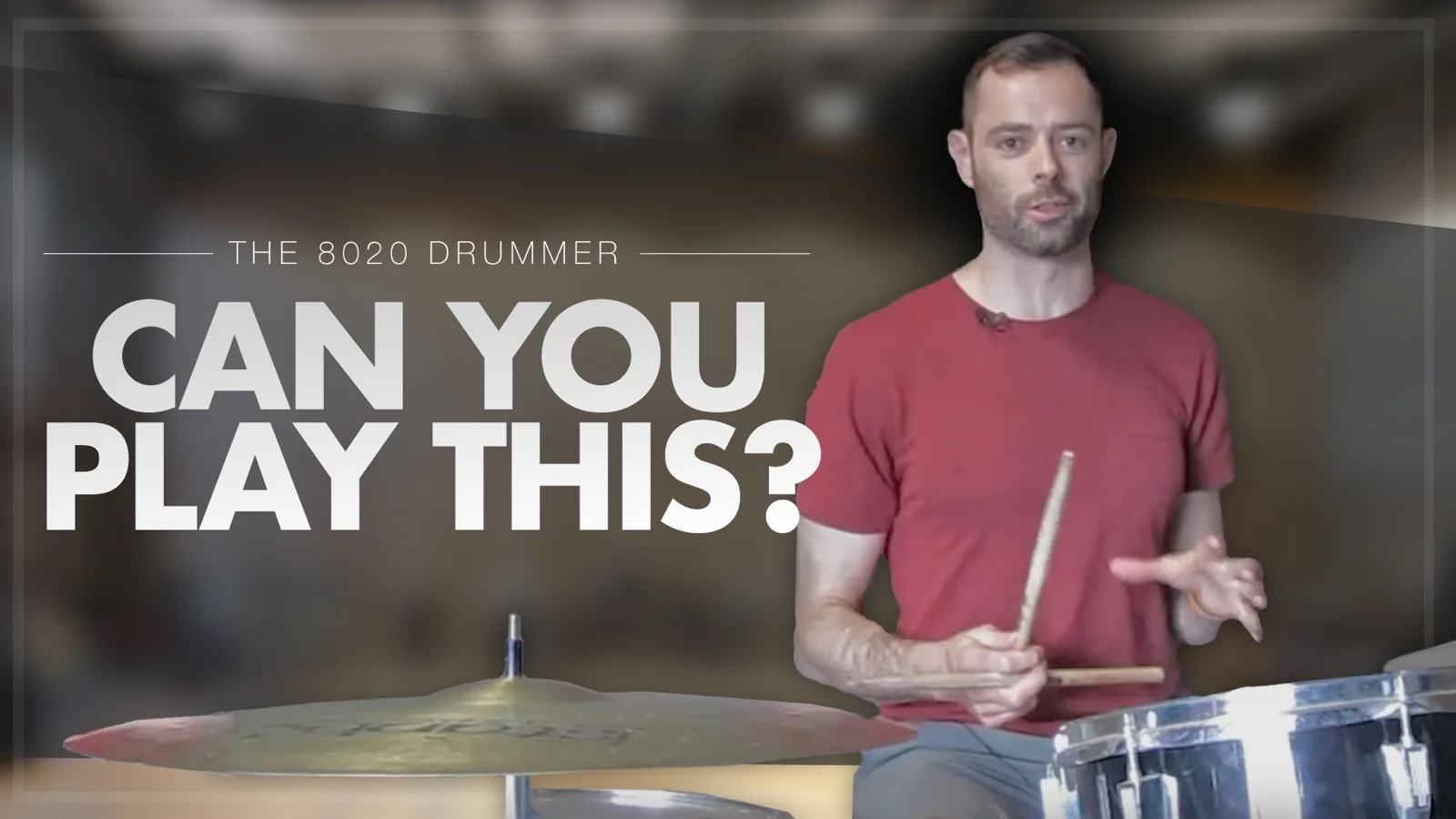
First things first: grab your transcription here.

Backwards Beat

The lesson I'm publishing this week is one I recorded just a week after I published the "are rudiments still relevant" lesson.

Since then, YouTube's kind of turned into a "show me your singles" contest.

Let me explain:

Two years ago, I did a lesson called "what I really think about hand technique". I spoke about things like back fulcrum, and the "overlap method" for making anything with doubles clean, slow-fast-slow.

I thought that lesson would start some controversy, but it was pretty well received.

Last month, I decided to circle around again to the issue of rudiments, since some of my YouTube brethren were weighing-in on it.

Now, I've always insisted that much of the way drums are currently taught is wasted time:

Practice pads...

Warm-ups...

Hours spent practicing the same abstract exercises...

But, in the latest rudiments lesson, I took a softer tone. Rudiments are important, I argued, for a number of reasons.

It's just that they've turned into a religion, or an orthodoxy.

Maybe, I hinted, if we spent 10% of the time we spent practicing rudiments on something else, it would be a better use of our time.

I called out my familiar culprits: lack of a clean sound, lack of hands/feet playing together when they're supposed to, and crappy time. And I showcased a couple of exercises to work on that stuff.

Most people were kind.

Some straight insisted on the rudiment orthodoxy without really engaging with the material in the lesson.

But a couple called out my rudiments. Haha.

At the beginning of the lesson, I played through a few standard rudiments, just to put some "skin in the game". If I'm taking a stand on rudies, I should put some of mine up there to judge.

I didn't think they were great - maybe B+.

I've stood alongside Maison Guidry when he plays singles. I've stood behind Greg Hutchinson as he played a solo on the snare drum. I've watched great classical percussionists play Delecluse. I have a pretty good idea what rudiments should sound like. (Haha look at me getting all defensive;)

Of course I was self-conscious, though. So I'll make another lesson soon devoted to everything that's awesome about rudiments, and will likely shed some material so that my rudiments are at least middle-of-the-road A.

But back to this week's lesson:

This week's beat is a good-natured "challenge" to everybody who thinks their singles are perfect.

First, I want to say, "congrats!" It's not easy, and you should be proud of your accomplishment.

Next, I want to offer this week's beat up, as the next thing to practice.

And let's keep it positive.

All things being equal, someone who practices a lot of rudiments is going to sound better than someone who doesn't.

Also, someone who sheds stuff like this week's lesson, and who can play it cleanly, will sound better than someone who doesn't.

It's not one-or-the-other. It's both.

Alright killers, that's where I'll leave it.

If you haven't picked up your transcription, do that below:

Backwards Beat
Comment

Q&A - Subscriber Only

Nate Smith July 23, 2018

It's been years since I've done a Q&A, so I wanted to bring you one this week. (I play too, though;)


I'm ambivalent about hierarchies.

At Berklee, I'm told, they have ratings for everything from improvisation to sight-reading.

At Interlochen, they had the Challenge System.

Everything was about "what chair are you". Even in otherwise-egalitarian sections, there was a rank-order.

Time that could have been spent practicing repertoire of fundamentals was spent practicing the "challenge music."

Those who won probably had an inflated sense of their abilities, and those who lost too-little hope.

Sounds like a clear-cut case for no-hierarchies-in-music, right?

Except I've seen hierarchies work immensely positively. Not in music, but in martial arts.

And I've seen their lack cause frustration and disappointment in music.

Done right, here's what the "belt system" allows you to do:

See progress

Feel good about your level relative to your experience

In music, we've got the "American Idol"/"Whiplash" effect. To illustrate, an anecdote from MSM:

When I sat in Gary Dial's class with other musicians with as much as 15-years-of-experience on me, I'd nontheless get frustrated that I didn't sound the way I wanted, and that I was inconsistent.

You could tell me that to think I'd be able to hang with such musicians was unrealistic, but I wouldn't have bought it. Everybody thought they were either born-with-it or not. Everybody wanted to be Harry Potter, or Neo.

By contrast, on the mats at Renzo's, I don't have to feel bad getting smashed by a brown belt. And you can "feel" the learning curve. Roll with a four-stripe white belt, and he'll usually feel looser, and a-beat-behind, even if he's got a strength or explosiveness advantage.

You'll be getting stuff on him, and won't know exactly why. Your OODA loop is shorter.

You really think that isn't also the case in music? It's not like we trade out our brains. The human-brain-is-the-human brain.

Belts in music would let a 5-year musician feel good about the solo he took, without lamenting that a 25-year musician ate his lunch.

If you saw a black-belt on that 19-year-old Monk Institute phenom, and looked down and saw only blue around your waist, you'd see visually that even though the other guy was younger, he'd put in a lot more time than you.

Belts work in jiujitsu because they're exposed to adversity every day. And, at least in the academies I've been exposed to, there are no "challenges" or "tests". The instructors watch your progress, relative to others and yourself, and make a decision. It's stochastic, bottom-up, and imperfect. And that's why it works.

Music could use more hierarchy. And more "sheds" - the musical equivalent to "rolls" in jiujitsu.

But art is still different than martial arts.

It's true that there's far too much relativism in music these days. (A fan of the channel once told me "there's no better-or-worse in music, it's just styles." Try telling that to James Brown when one horn player keeps tripping over the part.)

But it's also true that music, unlike a fight, is not "zero sum".

In jiujitsu, certain styles might be aesthetically beautiful, but they might get dismantled, by, say, Gordon Ryan.

In music, something that's unique and beautiful is allowed to just be unique and beautiful.

And I think arts hierarchies get malevolent when the go the direction of the Interlochen challenge system.

For one, you'd want the students challenging the instructors to get a truer idea of where they really stack up. (Being first chair in the high school jazz band is like being the hottest cowboy in the pickup truck.)

...and you'd want some accounting of the experience differences.

Folks, this is a thought experiment :P

Anyway, after writing reams, I give you The Lesson.

Hope you enjoy.

3 Comments

Cool Four/Five Beat - Subscriber Only

Nate Smith July 19, 2018

First-things-first: grab the transcription here.

Five Beat

This week, I’ve got a brand new lesson on a cool beat that’s halfway between 4 and 5.

I think some people go through phases.

For six months I made oatmeal every night, then I just stopped. (Now I’m wondering why, and starting to crave oatmeal.)

If you’d asked me a year ago what I was practicing, it was transitions between triplets and sixteenths.

For at least the last 3-4 months, it's been the relationship between 4 and 5.

It's hard to say what sparked the interest...

It was only later (in one of my friend Scott Devine's videos) that I discovered the concept of arriving at the Dilla beat by thinking quintuplets.

More likely, I saw lots of my friends starting to unpack the quintuplet, and I got Shiny Object Syndrome.

Well good damn thing.

I'm now convinced that a "sixth sense" for the relationship between subdivisions - Mark sent us to school on 2:3:4 - is one of the keys to hearing modern drum ideas.

Again - that's after you've got playing clean and playing in time under your belt. (I feel like an old man shouting from a porch;) If you try to transition from 4-to-5 with crappy time, noone will even know what you're doing.

Anyway, today's lesson explores one approach to entering that 4:5 dichotomy, by means of a cool, bottom-up beat in "5".

Hope you enjoy!

Here's that transcription again:

Five Beat
$0.00
Comment

Brush Lick (Subscriber Only)

Nate Smith June 17, 2018

First-things-first -

Grab the transcription here: 

Brush Lick for Swing

In music, in sports, and in fighting, there are the "highlight reel" skills:

Slam Dunks and Single Strokes

Quarterback Sacks and Double Pedal

Wins By Knockout and Odd Meter Solos

Berimbolo/Inside Heel Hooks and Blast Beats

Then, there are the "adult" skills.

Those unsexy skills that won't get you girls (or guys)...

...but they still take a lot of work.

For that category, I humbly submit brushes and half-guard.

You already know what brushes are.

Somebody on Instagram told me that was a "narrow analogy" because not every drummer knows what half guard is.

I replied, visualizing perturbed-Jimmy-Stewart at his typewriter, that every drummer worth a damn knows what half guard is;)

Well, I'm going to help you be "worth a damn".

Half guard is like the last resort when you're getting smashed by a grappling opponent, but you still have one leg to work with.

Instead of turning upside-down and ensnaring him acrobatically, you're mostly-squashed, and you're fighting for inches.

Half-guarders aren't dashing leading men. They're slightly-unsavory characters who have "made their bones". They're not Neo; they're Cypher.

The same is true of true brush artists.

When the chips-are-down, you can count on them to do-what-they-do, and what they do is live according to a byzantine internal code that eschews flashiness and embraces the Grind.

But here's the thing about half-guarders and brushians: like Bane, they welcome a bad situation. They live for it.

Paul Schreiner likes to let you think you're passing, snare you like an anaconda, then have his way with you.

Ed-Thigpen-“Mr.jpeg

Ed Thigpen could play ballads all night. He found a million miles of nuance in a few decibels of volume.

So, my drummers, I ask you: do you want to be transparently-glory-seeking? Then crumble at the first sign of trouble?

Or do you want you want to be the drummer from the Rated R movie?

The guy/girl with a few too many tattoos in the wrong places?

A few phone numbers you should probably delete.

If it's the latter, join me on this journey to the dark side.

Remember to grab your transcription below:

Brush Lick for Swing
1 Comment
  • Blog
  • Older
  • Newer

Welcome to The Blog!

Here you can check out an archive of lightly-guarded exclusive content for mailing list subscribers, including early access to podcast episodes and youtube videos.

youtube facebook
  • Quick Taste
  • About Me
  • Podcast


The 8020 Drummer

Practice Smarter

Stop practicing stuff that doesn't work. The 80/20 Drummer is dedicated to cutting through the BS, so you practice Only the important things. Save time, and start getting better.

youtube facebook